Where AI fits, and where it doesn’t
We believe creative work should stay human.
We also think technology can be genuinely useful around that creative work, particularly when it takes some of the administrative load off literary agents, helps them find the stories they’re looking for faster, and helps writers get responses sooner.
That’s the role AI plays in QuerySort.





Our position
AI is a complicated subject in publishing, and we understand why.
Like you, we don’t want AI writing books. We don’t want it replacing literary judgement, or deciding which stories matter.
But we also don’t think every use of AI is the same.
Software can use AI for one specific function without handing the whole workflow over to it. A product can decide what the AI is allowed to process and what it never sees.
We’ve been very deliberate about drawing those lines in QuerySort.


So what does AI actually do?
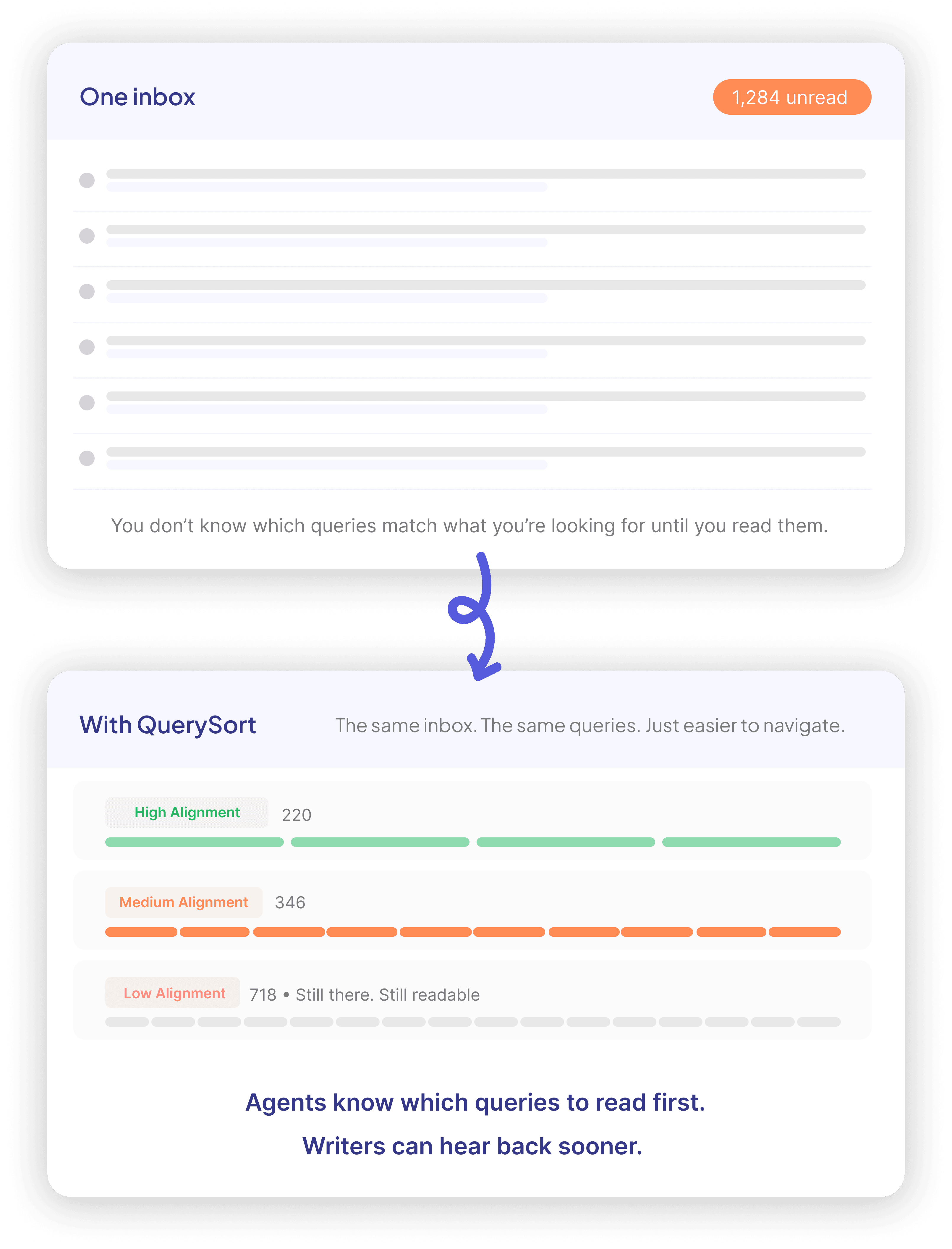
QuerySort uses assistive AI for one specific, bounded task: comparing an agent’s wishlist with the information writers provide in their queries. It then organizes those queries by how much they align with the wishlist and provides a short explanation of why that alignment was identified.
At its core, it’s comparing language with language.
What has the agent said they are looking for? What has the writer said their manuscript is about? Where do those things align?
It doesn’t decide whether the writing is good, whether the story deserves representation, or whether an agent should request pages. Those decisions belong solely to agents.
What QuerySort can do is make a busy query inbox easier to navigate, so agents can spend less time sorting and more time actually making those decisions.


What QuerySort doesn’t do
We’ve been very deliberate about where AI stops in QuerySort. These boundaries reflect what we believe technology should, and shouldn’t, be doing in publishing.
QuerySort does not:
Read manuscripts or sample pages, including pages attached to an email or pasted below the query itself (e.g. picture book manuscripts written in the email body)
Assess writing quality
Decide whether a query is “good”
Automatically reject writers
Make representation decisions
Replace an agent’s judgement
Generate or alter writers’ creative work
Why that matters
Why use AI at all?

What happens to query data?